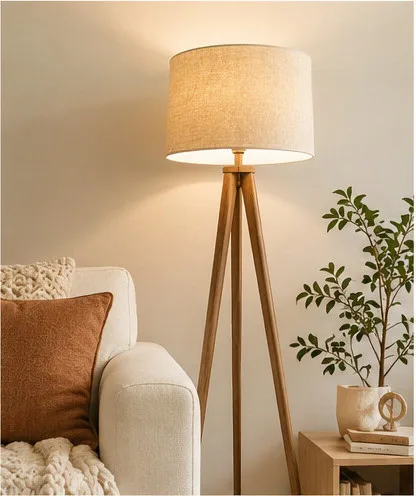
“Aesthetic home decor” is one of the most over-searched phrases on the Indian internet and one of the worst-served. The top results are mostly Amazon grids of fairy lights, polyester wall hangings, and resin Buddha heads. The aesthetic is real — restrained, considered, quietly photogenic — but the route to it is not a 200-item shopping list. It is a handful of small, composed moments inside a home, each of which can be built for the cost of dinner for four.
This guide gives you twelve of those moments. Each one is a defined surface — a console, a bedside, a kitchen counter — with a shopping list under ₹10,000. None of them require painting, drilling, or asking the landlord. They are designed for the renter, the just-moved-in, and the resident who has been in the same flat for six years and finally wants to do something about the corner near the dining table.
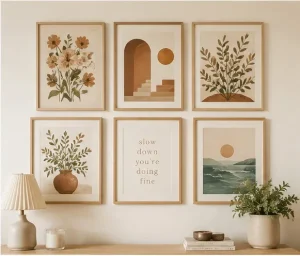
The single biggest mistake in self-styled “aesthetic” home decor is volume. The Pinterest board has eighty objects in it; the renter buys forty; the apartment ends up looking like a Daiso branch. A composed look is rarely more than four objects. It earns its presence by what you leave out, not by what you put in.
The second mistake is matching by colour. Everything-in-cream reads as a hotel lobby. The right composition uses two tones in tension — a deep clay against a pale linen, a near-black against a champagne. The eye needs something to land on.
The third mistake is forgetting height. A flat surface needs at least one vertical element — a vase with a branch, a tall candlestick, a stack of books with a sculptural object on top. Without a vertical, the eye reads the surface as “unfinished.” This is genuine — every interior designer’s rule of thirds is doing the same job.
A composed look is rarely more than four objects. It earns its presence by what you leave out.
Look 01 — The console moment
An entryway console, an empty-room sideboard, the surface behind the sofa. The brief is to make a flat plane feel composed in under sixty seconds of styling. The math: one vertical, one horizontal, one sculptural, one functional.
The shopping list (₹2,200): The Beige Ceramic Loop Vase set with pampas grass” >Beige Ceramic Loop Vase set with pampas grass (₹899, vertical), a small stack of two hardback books from your existing shelf, a Cat Heart Trinket Dish” >ceramic trinket dish (₹599, functional — holds keys), and a single hand-painted bowl from the bowl collection” >bowl collection (₹699, sculptural).
Place the vase to the left, books slightly off-centre, dish in front of the books, bowl on the right. Step back. Adjust one inch. That is the entire look.
Look 02 — The morning corner
The kitchen counter where you stand for forty-five minutes a day waiting for tea, toast, and the news to load. The brief is to make those forty-five minutes feel slightly less utilitarian without losing any function.
The shopping list (₹2,700): The hand-painted ceramic canister with wooden lid” >hand-painted ceramic canister with wooden lid (₹999, for sugar or tea leaves), a hand-painted ceramic mug from the mug collection” >mug collection (₹399, the one you actually use), a white daisy ceramic cup-and-tray set” >white daisy cup-and-tray set (₹599), and a small ceramic bowl for biscuits (₹699).
The canister anchors the back. The cup-and-tray sit front-and-centre. The bowl floats to the side. The kitchen counter now reads as composed, even before you have cleaned the gas stove.
Look 03 — The bedside ritual
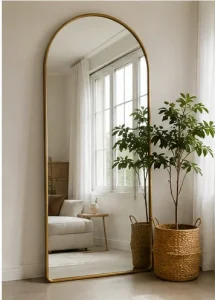
The bedside table is the most personal surface in an Indian home. It carries the book, the phone, the water bottle, the alarm. Every decoration competes with active utility. The discipline here is to add exactly one small object that earns its space.
The shopping list (₹1,300): A single ceramic trinket dish” >ceramic trinket dish (₹599, holds watch and earrings) and a small hand-painted bowl (₹699, holds your reading-glass case). Skip the candle. The bedside table is already at maximum cognitive load.
If you sleep alone, you can stretch this to a small vase with a single dried stem — the dried branch survives the months you forget to water plants. If you share the bed, ask first.
Look 04 — The breakfast table for two
The dining table is a hard surface to style because it has to clear for actual meals. The trick is a centrepiece that is small enough to never be in the way and beautiful enough to be missed when it is.
The shopping list (₹3,400): The white textured face vase set of two” >white textured face vase set of two (₹899) — set one at the centre — paired with two hand-painted mugs (₹399 each), two bowls (₹449 each), and a pair of dinner plates from the plates and tableware collection” >plates and tableware collection (₹649 each). Total for a complete two-person breakfast tablescape: ₹3,393.
The visual logic: the vases sit dead-centre when the table is unused. They slide six inches towards the wall when food arrives. The plates and bowls do the daily work. The mugs travel with the tea pot.
Look 05 — The Sunday brunch tablescape
The aspirational version of the breakfast table — the one you photograph when friends come over. The trick is layering: a base mat, the plates, the bowls, a small centrepiece runner of low objects.
The shopping list (₹4,600): The Woodland Floral Terracotta Rim Dinnerware Set” >Woodland Floral Terracotta Rim Dinnerware Set (₹1,999), two pairs of hand-painted mugs (₹399 × 2 = ₹798), a ten-piece bowl set” >ten-piece bowl set for serving snacks (₹1,099), and a small ceramic vase pair” >small ceramic vase pair (₹899).
Sunday brunch ergonomics: keep the centrepiece below six inches tall so guests can see each other across the table. The Woodland Floral terracotta rim gives the look an Indian register that imported white china does not.
Look 06 — The reading nook
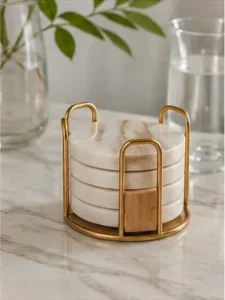
The reading nook is the corner of a room — an armchair, a side table, a lamp. Most renters have all three and have not yet realised they have a reading nook. The styling brief is to make the side table look like it expects a book to be set down on it for fourteen hours.
The shopping list (₹1,800): A single ceramic trinket dish” >ceramic trinket dish for the bookmark and the reading glasses (₹599), a single hand-painted ceramic mug” >hand-painted ceramic mug (₹399), and one small ceramic bowl” >ceramic bowl (₹699). Optional: a candle in a glass jar (we will be carrying these soon — coming to The Plush Republic later this year). For now, swap with a small dried-flower arrangement in a leftover jar.
The side table is allowed to look slightly cluttered. A reading nook that looks like a magazine shoot has never been read in.
Look 07 — The bathroom shelf
The bathroom is the most under-styled surface in Indian homes and the easiest to upgrade. The brief is to replace the plastic-bottled detritus on the counter with three ceramic objects and a tray. Function does not change. The morning feels different.
Currently we do not carry bathroom-specific pieces — amber glass soap dispensers and bath salt jars — coming to The Plush Republic later this year. The interim solution: a small hand-painted bowl” >small hand-painted bowl (₹449) holding the bar soap, a trinket dish” >trinket dish (₹599) holding your rings before the shower, and a single ceramic mug (₹349) holding cotton buds. Total: ₹1,400.
The transformation is disproportionate to the spend. The bathroom now looks like a hotel bathroom because the visible objects are ceramic, not plastic.
Look 08 — The entryway
The entryway in most Indian apartments is one of two things: a four-foot hallway that immediately gives onto the living room, or a corner inside the front door. Both deserve a single composed object. The brief is the first thing guests see and the last thing you see leaving for work.
The shopping list (₹1,500): A single textured face vase from the set of two” >textured face vase with a single dried branch (₹899, treat the set as buy-one-keep-one-bedroom), and a trinket dish” >trinket dish for keys (₹599). Mount the dish on a small ledge if you have one. Otherwise the dish lives on top of a stack of two hardback books on the floor — the floor is allowed to be part of the styling.
Look 09 — The work-from-home desk
The desk is high-stress real estate. Every styled object has to survive being shoved aside during a call. The discipline is brutal: maximum two non-functional objects. Each must be small.
The shopping list (₹1,000): One hand-painted ceramic mug (₹399 — your tea, not a decoration) and one small ceramic trinket dish (₹599 — your USB sticks, your hair-tie, your wedding band). That is the entire allowance. A vase on a working desk gets knocked over inside a fortnight.
The aesthetic gain is from removing things from the desk — the mouse pad you do not use, the stationery stand you have not opened, the receipt pile. The two ceramic objects then read as composed because they are not competing with seventeen others.
Look 10 — The kitchen counter trio
A different kitchen application from Look 02 — the trio for the gap between the gas stove and the wall. The brief is the corner that catches dust and currently holds a tin of biscuits and a spare lighter.
The shopping list (₹2,200): The ceramic canister with wooden lid” >ceramic canister with wooden lid (₹999), the ten-piece condiment jar set with tray” >ten-piece condiment jar set with tray (₹599, but use only four of the jars on the counter — keep the other six in storage), and a single tall ceramic mug (₹599) for wooden spoons.
Functional, photogenic, and the salt-and-pepper jars are now within arm’s reach of the stove instead of buried in a drawer.
Look 11 — The dining sideboard
The dining sideboard — the long horizontal credenza beside the dining table — is the largest single styling surface in most Indian homes. It can absorb seven or eight objects. The brief is to compose them in three distinct groupings rather than one continuous row.
The shopping list (₹4,500): The Beige Loop Vase with pampas grass” >Beige Loop Vase with pampas grass (₹899) at the far left. A stack of three cookbooks at centre, topped with a trinket dish” >small ceramic trinket dish (₹599). The white textured face vase set” >white textured face vase set (₹899) at the right end. Between the groupings, leave six to eight inches of breathing room.
If you have a bottle of nice oil or vinegar that lives on the dining table, transfer it to the sideboard — it counts as a fourth grouping. Bottles with good labels are quietly the best styling object in an Indian home.
Look 12 — The corner that needed something
Every Indian apartment has at least one corner that has been bothering the resident for two years. A floor corner near a window. The sliver of wall beside the sofa. The dead space at the end of the bookshelf. The brief is one object, on the floor, that fills the corner without crowding it.
The shopping list (₹900): The Beige Ceramic Loop Vase set with pampas grass” >Beige Ceramic Loop Vase (₹899) — but on the floor, not on a table. Floor vases under twelve inches need to lean against something to look right. Set it against the wall, slightly off the corner, with the pampas grass tilting outward.
This is the cheapest, lowest-effort styling move in the entire guide. It rescues more Indian living rooms than any other single object.
The acquisition order
You should not buy twelve looks at once. The discipline is to pick the surface that bothers you most — the empty console, the chaotic kitchen counter, the bare entryway — and build that single look first. Live with it for a fortnight. The eye adjusts. Then build the second look. By the fourth one, you have absorbed the principle and are styling new surfaces from your existing inventory without needing a shopping list.
The four most-leveraged objects in the entire catalogue, in priority order:
1. A small ceramic vase. The Loop Vase” >Loop Vase or the Face Vase pair” >Face Vase pair. Any flat surface in your home gets a vase first.
2. A ceramic trinket dish. The Cat Heart Trinket” >Cat Heart Trinket Dish or the Ceramic Star Trinket Tray” >Ceramic Star Trinket Tray. Holds keys, jewellery, change, USB sticks.
3. A single hand-painted mug. Drawn from the mug collection” >mug collection. The most-touched object in any kitchen.
4. A canister or jar set. The canister” >canister and condiment set” >condiment set. The counter visibility move.
Those four objects, in the right colourways, will get you eight of the twelve looks above for under ₹4,000. The remaining four require the dinnerware set or the larger gift sets, which are foundation purchases, not styling additions.
One last note on photographing the look
Once you have built any of these twelve, photograph it. Stand directly above the surface for the flat-lay; stand at the surface’s edge for the side view. Use the morning light from the nearest window. Do not arrange the objects perfectly square — a one-degree tilt reads as used, which is what you want. A perfectly squared composition reads as staged, which is what you do not.
The aesthetic, in the end, is the gap between the staged and the lived. These twelve looks are designed to land squarely in that gap and stay there.
Back to journal