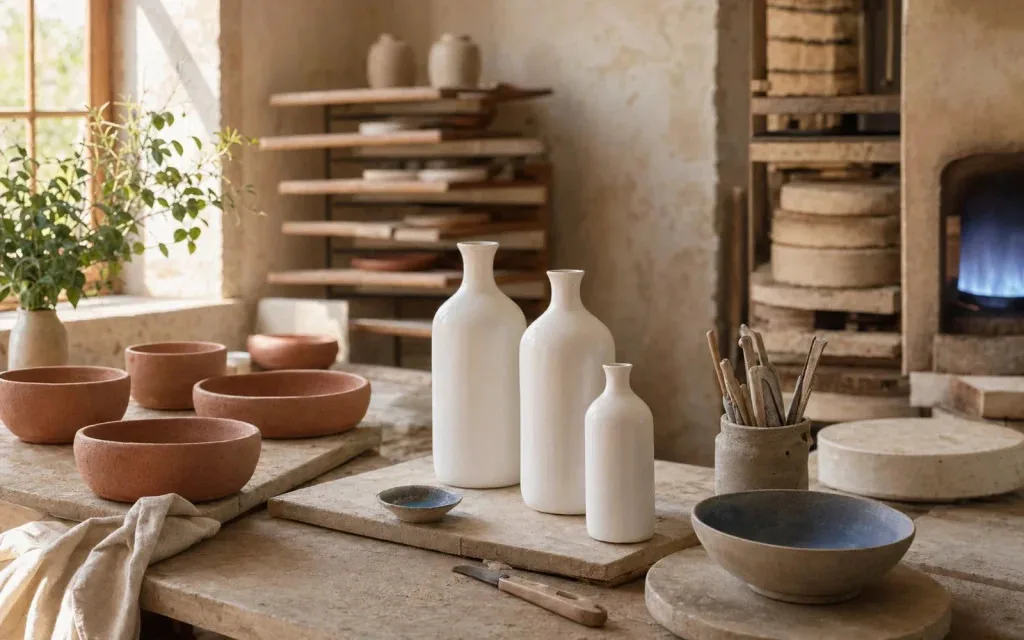
Khurja in the morning has a particular palette. Before the day becomes loud, the workshop is mostly three colours: red clay, white glaze, and the blue hint of heat near the kiln.
The red comes first. It is on the floor, under the fingernails, at the base of each unfinished bowl. Red clay is the beginning of the object, and it looks nothing like the piece a customer eventually places on a table.
Red: the working colour
Clay at this stage is all possibility and risk. It can become a cup, collapse at the rim, crack while drying, or wait perfectly still for the next hand. The best workshops treat this stage with humility.
That humility matters. A hurried piece carries the hurry with it.
White: the edited colour
White glaze has a different temperament. It cleans up the form, catches light, and makes small shifts in silhouette easier to see. A white vase can feel architectural even when it is modest in size.
For Plush Republic, the white and ivory pieces became the easiest bridge between supplier catalog and real home. They work with linen, wood, brass, and the kind of imperfect daylight most rooms actually have.
Blue: the waiting colour
The blue is not decorative. It is the color of heat and time. Once a piece goes near the kiln, the maker has to give up a little control. Glaze moves. Colour deepens. Small decisions become permanent.
Every ceramic piece is designed by a person, then finished by heat.
That is the reason we like these objects. They are practical, but they still carry evidence of process. You do not need to explain that to a customer for them to feel it.
Back to journal